

Flavor on a Slab: Himalayan Salt Blocks Changing the Restaurant Dining Experience
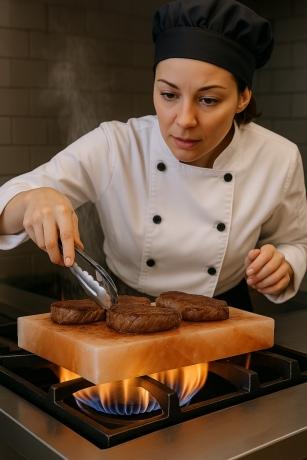
Enter any typical trendy restaurant of today and you would find something peculiar going on, food being cooked or plated on not the ordinary pans or dishes but instead on shining pink slices of rock. These are not purely ornamental decisions, these are Himalayan salt blocks, and they are reinventing the laws of food preparation, seasoning and consumption.
Whether they are in the form of a five-star restaurant or a rustic steak house or the hot spot sushi house, chefs are now using these age-old salt blocks not only because of its mineral rich flavor but also because of the eye-catching layout they bring to the table and their flexibility in usage. With the article, we analyze how Himalayan salt blocks are transforming the restaurant dining experience ranging to the kitchen area and the table.
What are the Himalayan Salt Blocks?
Himalayan salt blocks are solid blocks carved out of natural salt deposits at the Khewra Salt Mine in Pakistan which is one of the oldest but purist salt mines in the world. These blocks occur in light pink to deep orange color because of the presence of more than 80 trace minerals such as iron, magnesium, potassium, and calcium.
They have a food grade, that is they are safe to use in cooking and serving and they are used in many ways:
Highly grilled or charred on the fire
Ice boxes or freezer where foodstuffs are put in to have a cold meal or dish
People would use as surfaces to cure meats or fish
They are plated up to enhance the sense of sight, taste.
However, what is so beautiful about them is that they are versatile: not that it is their only quality, it is their determination to enhance food not by artificial means, but by themselves.
The Way Himalayan Salt Blocks Flavor food
Other than the usual cooking equipment used in cooking, pink salt blocks add natural saltiness to food in the most subtle way. The surface, when hot, interacts with food moisture and only the appropriate load of salt is transferred. The effect of this is:
Even seasoning even on surface of food
Enrichment of minerals, instead of the overwhelming meaning of saltiness
Balanced texture particularly to proteinous food such as steak, scallops or chicken
The salt is very mineral-laden, so the taste will be more pronounced as compared to ordinary table salt, with deep and heady notes with some sweetness and an intricate background.
Himalayan salt blocks are the dream accompaniment of restaurants that boast of clean flavors and natural ingredients.
The Restaurant Showstopper: Cooking And Serving On Salt
In the modern competitive world, it is not enough to give a guest a meal, he needs to experience it. The Himalayan salt blocks are used as a cooking and a visual display medium and they enhance a dramatic effect that will long be remembered long after the last bite.
1. Cooking Live at you Table
Table tablets are put on the table with hot salt and the meat, vegetables or seafood are cooked in front of the clients by important customers. Some sound, smell and vision of the food changing in front of the eyes shows an element of entertainment in the meal.
2. Get served Cold Delicacies
When frozen, salt blocks can be the beautiful serving surface of such food as:
Sashimi and sushi
Fruit platters
Ceviche
Frozen treats, ice cream
Not only does that help enhance visual representation, but it also adds a faint, refreshing saltiness that goes with sweet or raw dishes especially well.
3. Sustainable Plating
Unlike throw away serving or ordinary plates, Himalayan salt blocks are reusable, all natural and make a great conversation starter with guests.
Diners love it because of the Experience Factor
The experience of the dinner on the Himalayan block of salt is something that involves all the senses:
Sight: The pink salt lights the view with a cosy rustic touch of class
Sound: the low hiss of food being cooked in front of you
Smell: the odors that the food provides when it comes into contact with the hot surface
Touch: The physical aspect of chopping or plucking food straight out of the block
Taste: Equilibrium of mineral salt and flavour of food nature
Just as in a world where patrons do not settle to eat good food; they demand visual perfection and a great story, Himalayan salt blocks platters are a perfect fit.
Soundness, Sanitation and Innocence of Nature
Among the many advantages that are an unknown item but significant, it is the fact that Himalayan salt is antimicrobial. It prevents growth of bacteria hence safer surface both raw and the cooked foods especially in commercial kitchens that are on high traffic.
Other health benefits are:
No extras are needed in regards to oil or fats in cooking
No synthetics or chemicals of any sort
It is of course full of minerals such as calcium and potassium
Gluten-free and vegan naturallyThanks to the fact that half of its products are gluten-free and the rest vegan-friendly, they enjoy great popularity today.
Himalayan salt blocks are a perfect match with the brand values of restaurants specialized in clean eating, using organic ingredients, or other wellness trends.
Restaurants Considerations
Though the use of salt blocks is beneficial, it also needs carefree and good handling so that they last longer and can be used in a safe manner.
This is what should know restaurants:
Gradually heat: Himalayan salt blocks should be heated slowly otherwise the block becomes cracked which is due to the sudden heating process of the block.
Never soak in water, clean with a damp cloth and dry up
Unless used on gas surface, electric, or grill, not over the open flame
Exchange usage so that a specific area is not wearing out
Change when scratched or cracked after several tens of use or when the surface becomes too rough or too scratched
Some restaurants go as far as grinding down well-worn blocks into seasoning salt or selling smaller portions as part of a retail or take-home pack and this is an added source of revenue.
World-wide Restaurant Trends:
Himalayan salt blocks cooking and serving is on the rise in nations all over the world:
Fine steak-houses (to sear and plate live)
Japanese and Korean restaurants (to have an experience with sushi and hot stone)
Up to date dessert bars (offering gelato or frozen frozen fruit on frozen slabs)
Restaurants that want to combine conventional and hip trends use fusion cuisine restaurants
A treatable novelty in the earlier times, it has become an everyday course in most fine-dining and boutique kitchens.
Conclusion: Mountains to Menu
In the restaurant industry, the trend towards the popularity of Himalayan salt blocks is not just a phenomenon but it is a shift back towards natural and elemental food. These just have to be blocks, tools that tell stories, not say just ancient earth and fancy food.
To chefs and restaurant owners who want to be different, need to add perceived value and want to give something special to customers, Himalayan salt blocks can do it all; they have it all flavor, flair, and functionality.
The next time you encounter a luminescent slab of pink that is behind your steak or scallop, remember this; it is not simply eating a meal. You are sipping some slab of ground, in style.